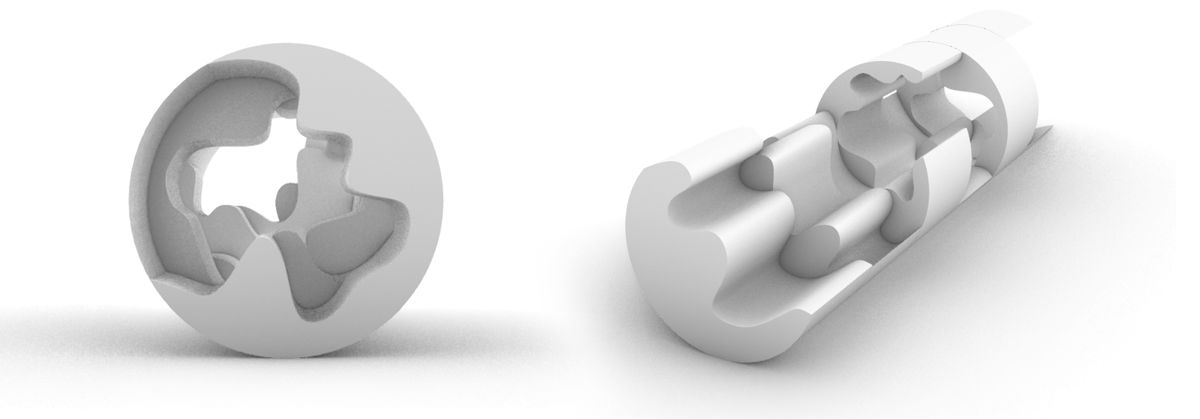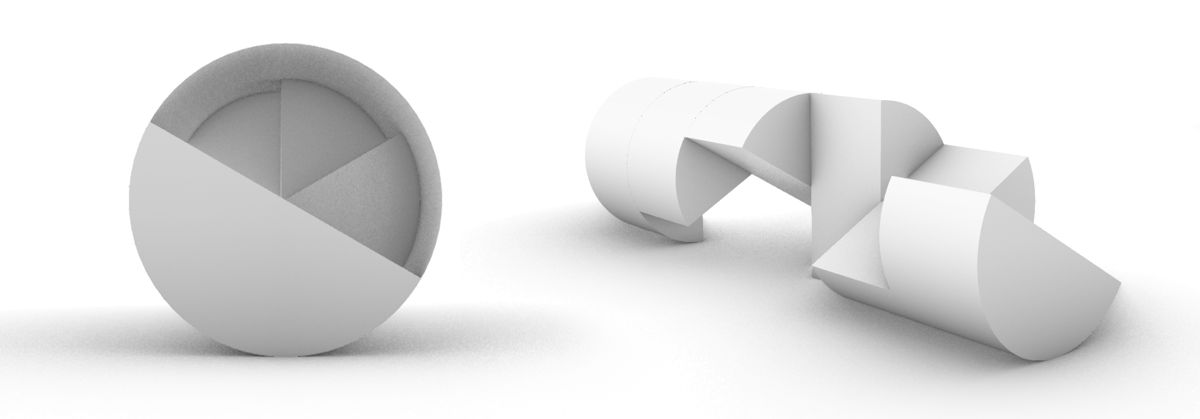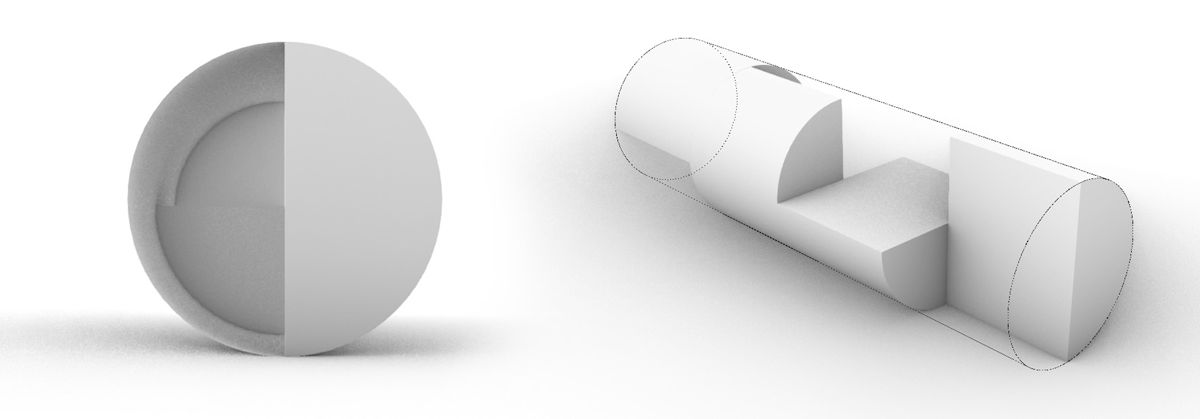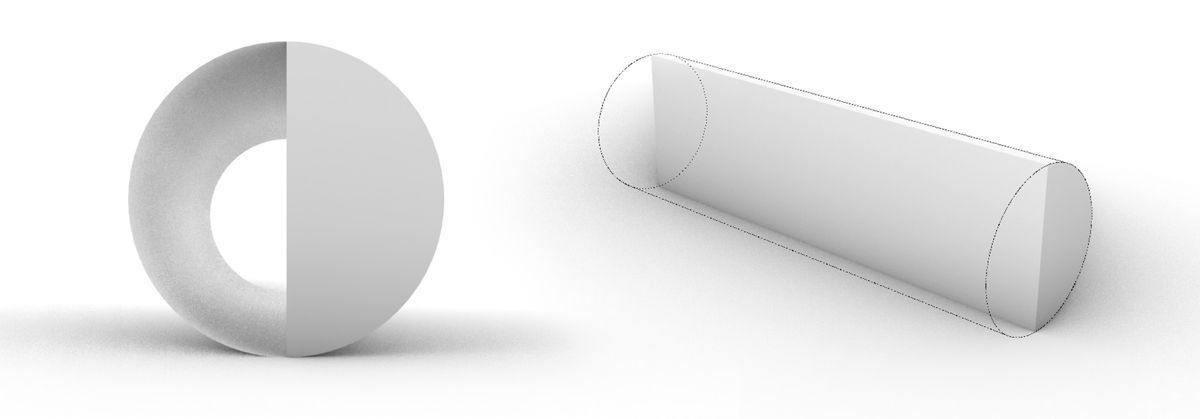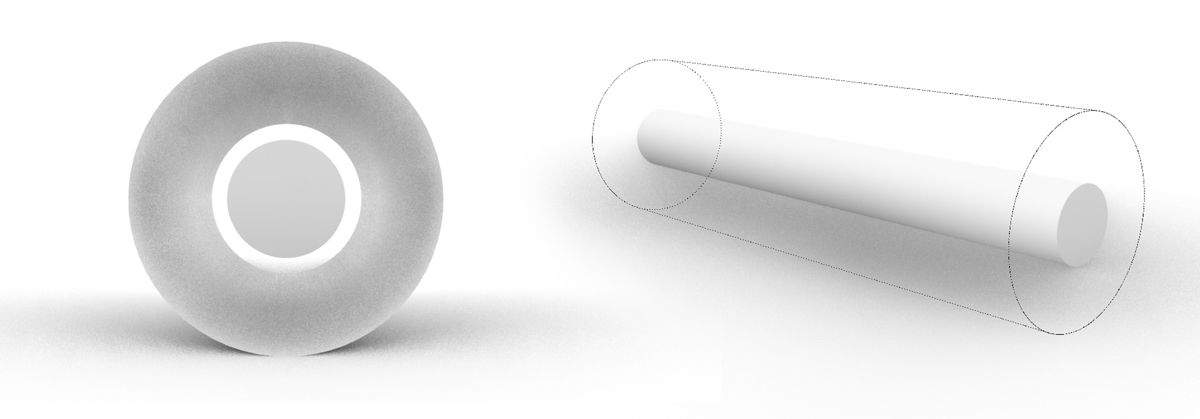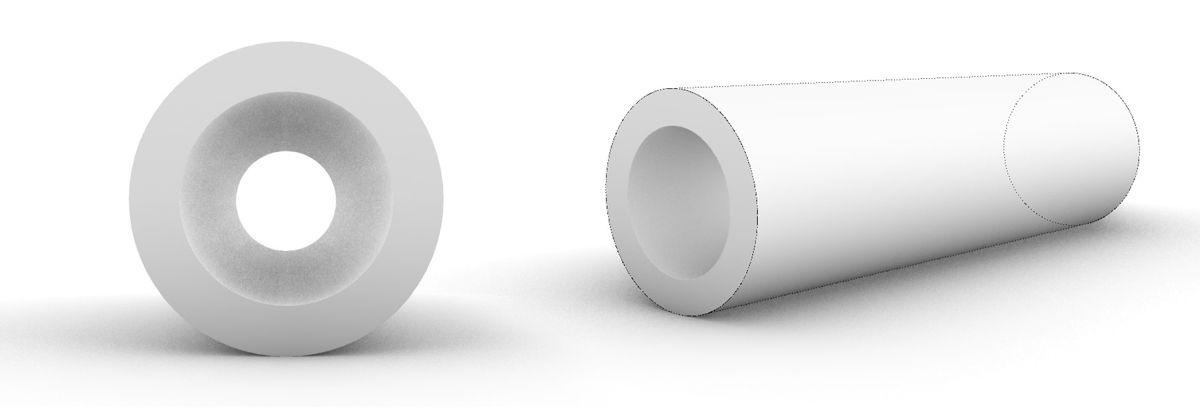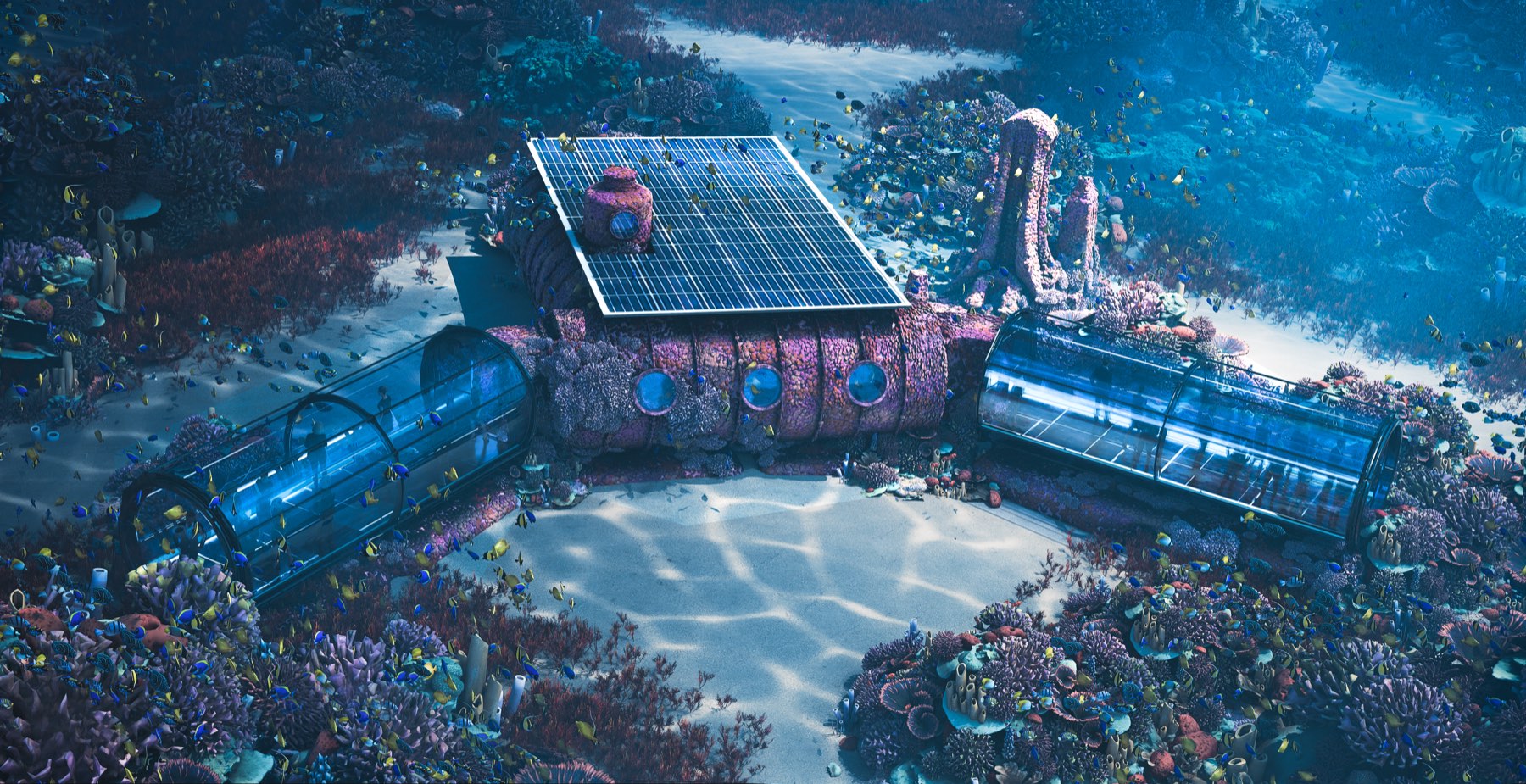
PRISM habitat set into a coral reef: coral-encrusted steel core, two transparent acrylic wings, rooftop solar array

PRISM

Flagship Subsea Habitat

SeekingUS $6.0MSeed · Tranche One
Confidential investor briefUnderwater habitat portfolio · August 2026

We build underwater habitats. PRISM is our deluxe model: a five-module subsea residence of steel and cast acrylic, set into a living coral reef at 10 to 15 metres, kept at surface pressure, and run with no pier, no buoy, and no umbilical to shore. It hosts five residents for two weeks or twenty-five guests for a long weekend, with the reef itself as the view from every room.

Since the 1960s dozens of habitats have been built; today only two remain in operation worldwide, and every commercial underwater hotel or restaurant is a fixed structure reached by stairwell. PRISM is designed as the first true luxury habitat of the modern era: surface-independent, decompression-free, and roughly twice the living area of Aquarius Reef Base, the largest working habitat today. Falling costs in cast acrylic and lithium storage make a build possible now that was not possible a decade ago, and the field is moving again: 2026 sees the first new American habitat in forty years reach the water in the Florida Keys, backed by nine figures of private capital.

1 ATMSurface pressure, no decompression
5 + 2Modules + junctions, 9 m × 3.25 m
25 / 5Guests weekend / residents 14 days
14 daysFull surface independence
65 m²Living area, ~2× Aquarius
540 kWhLiFePO₄ energy system
1.5×Structural safety factor (submersible practice)
0Umbilicals, piers, or surface structures

The Habitat

A reef residence, not a diving bell

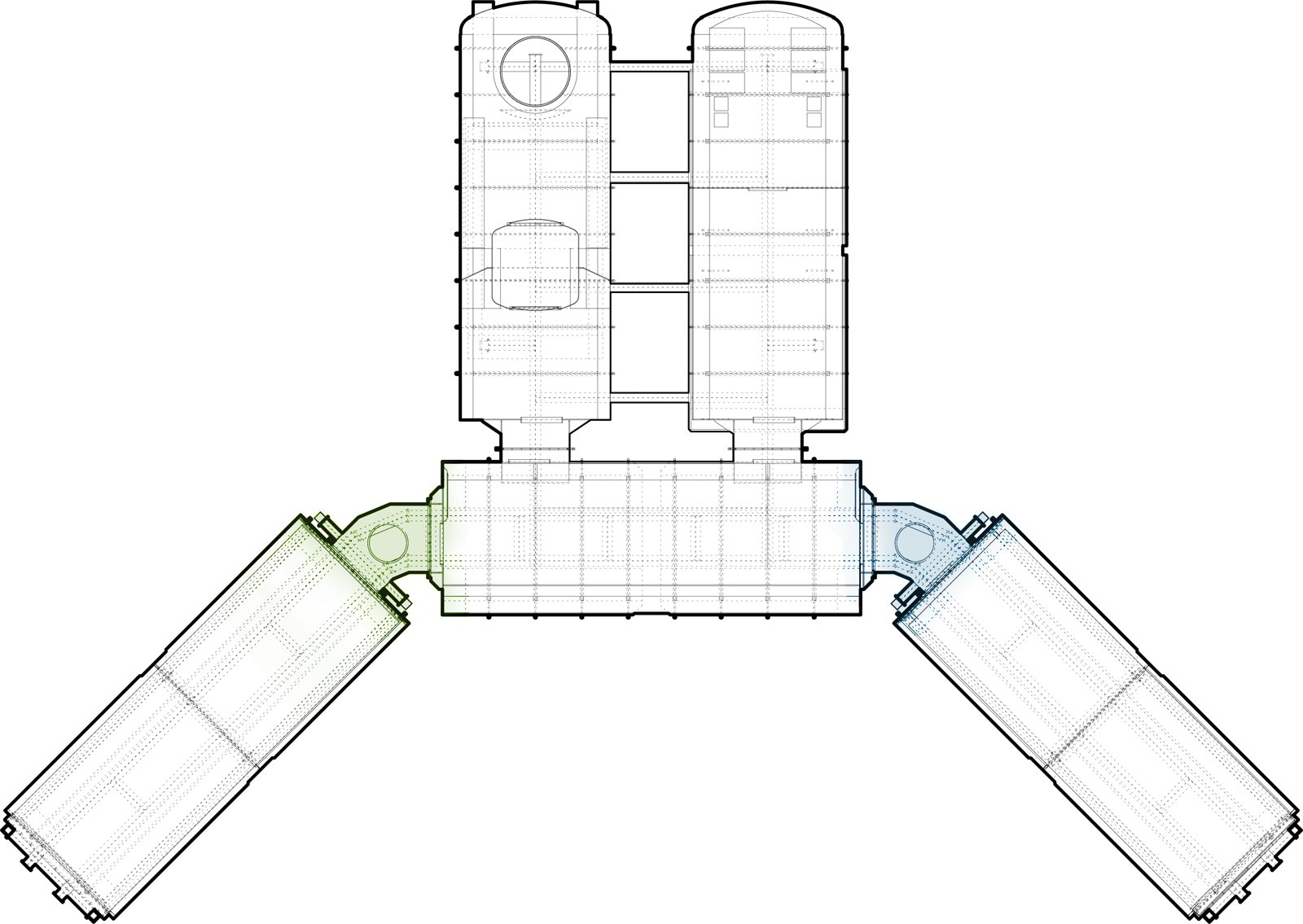
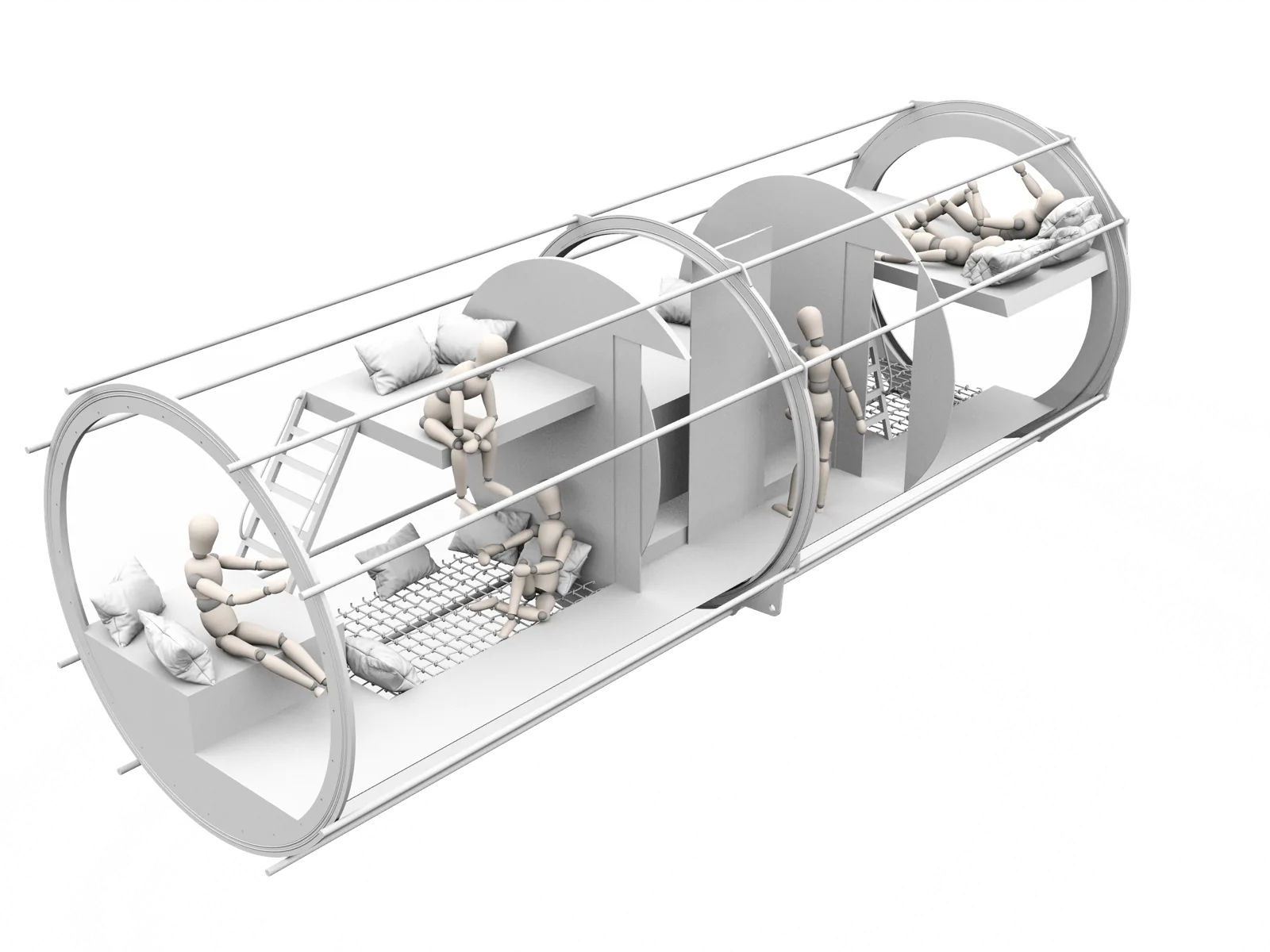
  • Two fully transparent cast-acrylic modules (100 mm wall) for living and sleeping, wrapped around a patch of reef.
  • Steel centre module with kitchen, dining island, and a cylindrical library; separate machinery and dive-centre modules.
  • Moon pool entry plus primary and auxiliary airlocks; an unpowered five-person transfer bell brings guests down at surface pressure, so anyone can visit, including guests with disabilities.
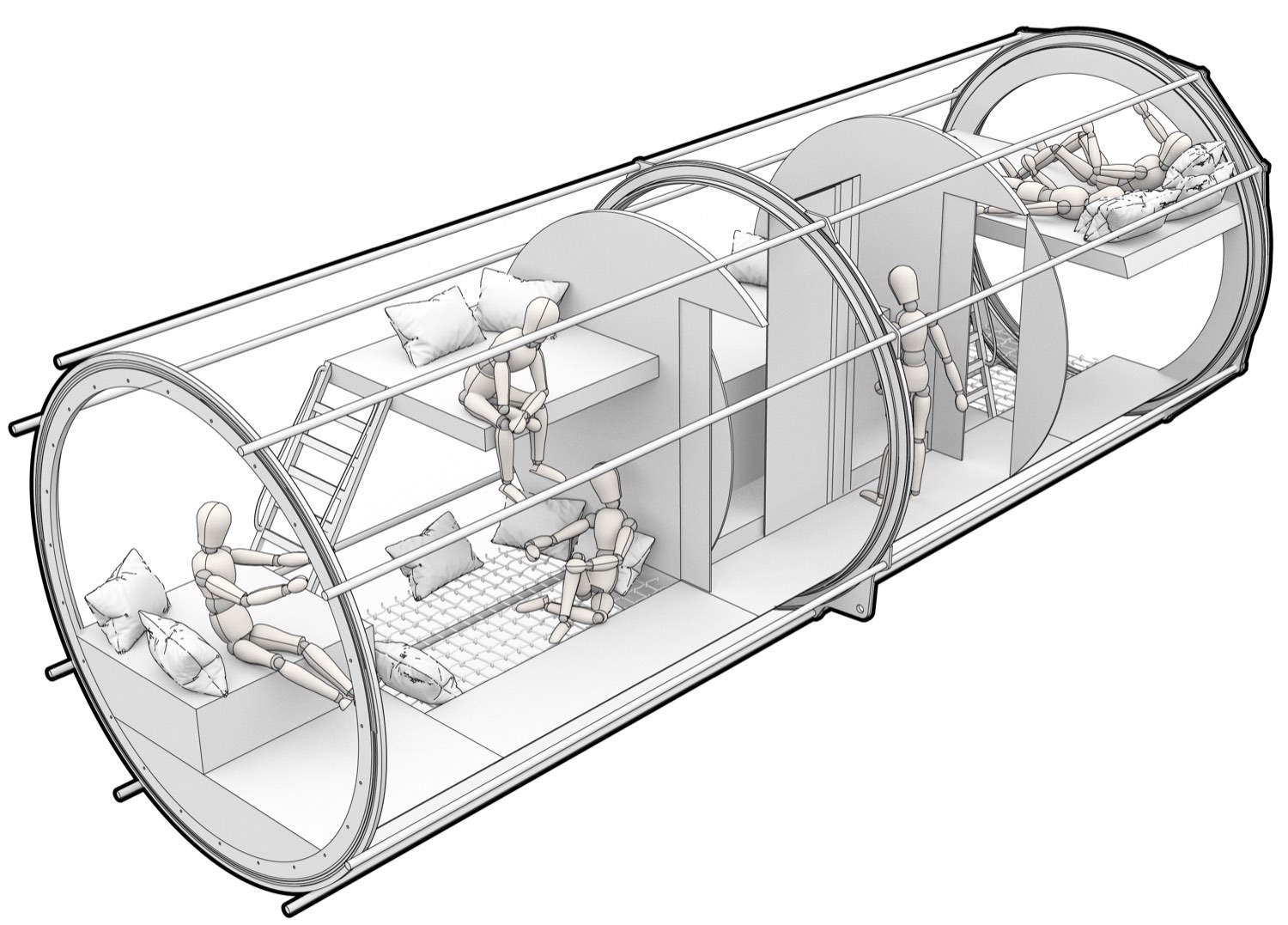
  • Interiors by Liquifer, the Vienna space-architecture studio: suspended nets, multi-level platforms, Japanese-inspired convertible furniture.
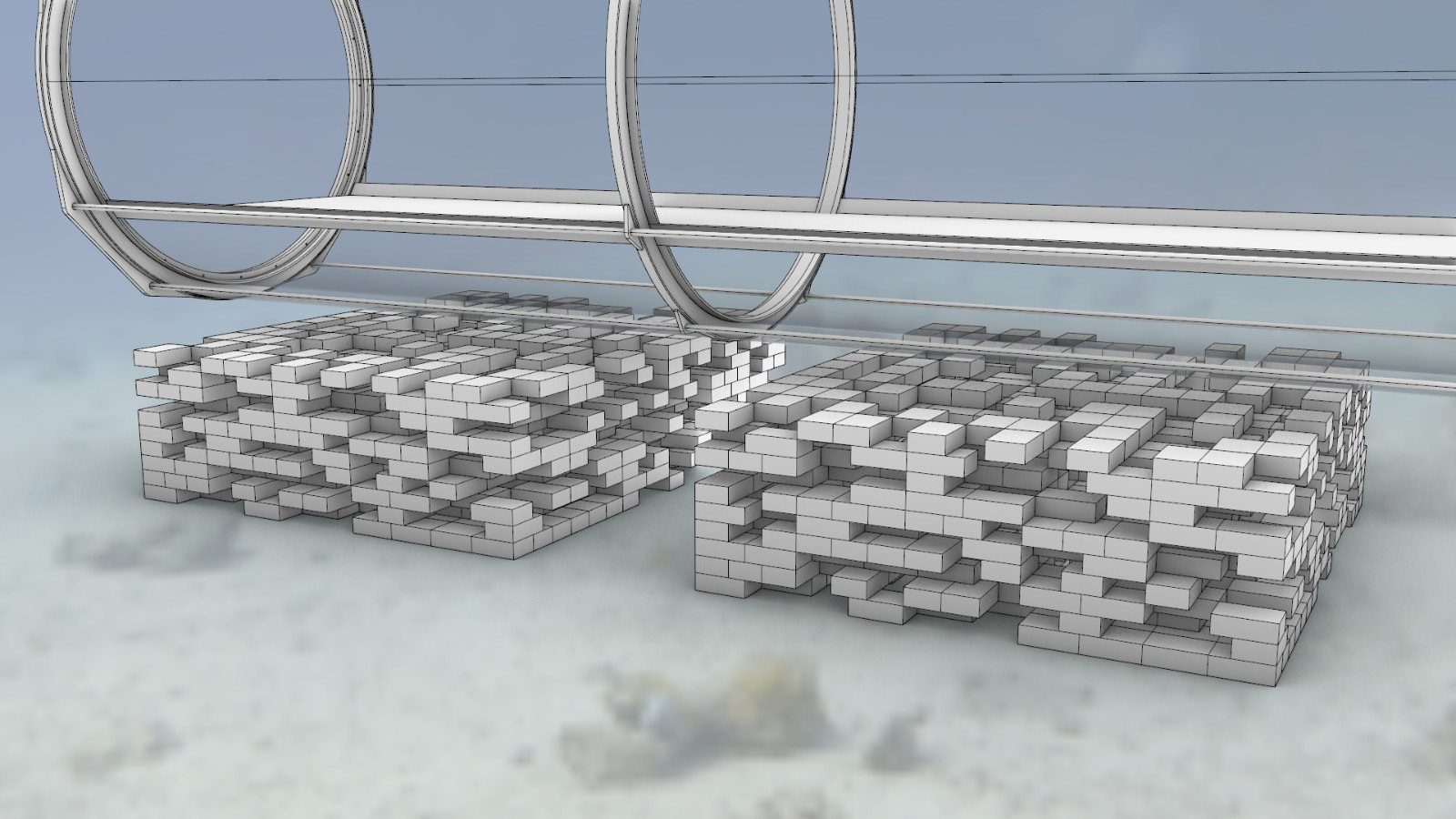
  • The exterior is a designed reefscape: sculpted fairings, an artificial reef, a reef temple, gardens, hydrophone soundscapes, and camera arms guests control from inside.

Engineering & Safety

Submarine discipline, hotel comfort

  • Interior held at 1 ATM: no saturation, no decompression on exit, and a free swim to the surface is always available through three separate hatches.
  • Every module seals independently and carries duplicated life support; primary and backup systems swap roles every eight hours so both are always proven.
  • Oxygen banked on the seabed for 14+ days; per-module backup batteries; emergency breathing apparatus for every person aboard.
  • Designed to ASME PVHO practice with ABS and DNV underwater-technology rules as reference standards; welding and NDT specified to PD 5500.
  • Biweekly service by a dedicated 10 m support vessel: power, oxygen, fresh water, and waste in a single visit.

Technical Dossier

The engineering under the glass

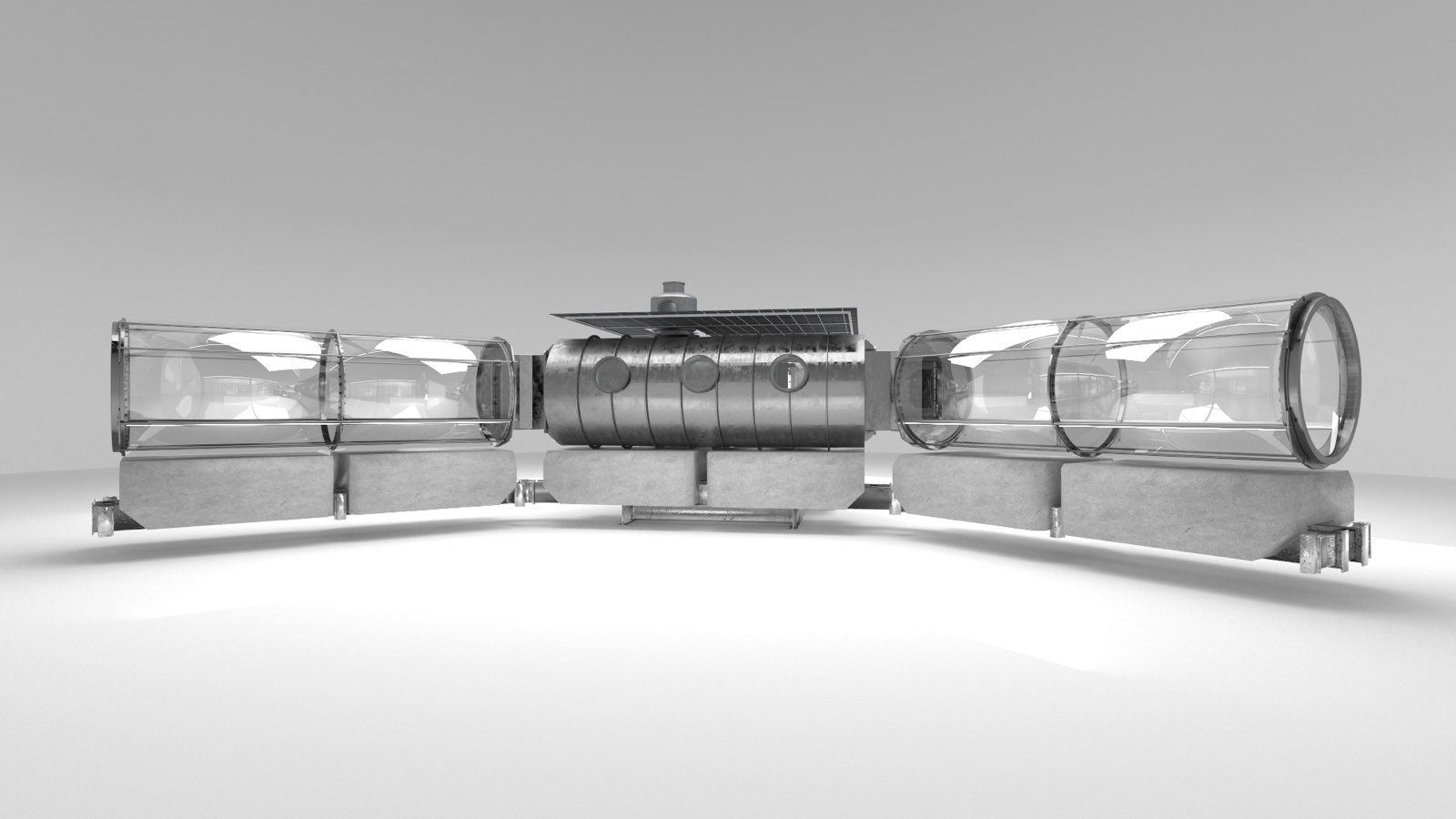
Engineering render, front elevation: two acrylic wing modules on concrete ballast blocks flanking the coral-clad steel core
Primary structure · engineering render, front elevation
Cutaway of the sleeping module: three private cabins at multiple levels with suspended nets and platforms inside the acrylic cylinder
Sleeping module · design cutaway, three private cabins

Structure & materials

  • Pressure hulls in EN 10025 S355J2 structural and EN 10028-3 P355NL1 pressure-vessel steel; fabrication scoped at EN 1090 execution class with 100% MPI on fillet welds and 100% radiography on butt welds to PD 5500 and PVHO.
  • Wing modules in 100 mm virgin cast acrylic with a 200 mm flat acrylic end viewport; three-layer marine coating system (zinc epoxy, epoxy barrier, polysiloxane finish).
  • Each module displaces roughly 70 tonnes and rides on cast-concrete ballast; the structure carries a 1.5× safety factor over maximum site depth, the practice used for manned submersibles.

Atmosphere & life support

Cabin pressure1 ATM ± 1.7%
Oxygen21% · alarms 17–23%
CO₂< 1,000 ppm · alarm 2,000
Humidity< 50% RH
Seabed O₂ bank132,000 L · 150% margin
  • Sizing from established manned-subsea metabolic tables (25 L O₂ per person-hour); soda-lime scrubbing in duplicated sets per module, swapping duty every 8 hours; HEPA and activated-carbon purification clears a module of smoke in about 4.5 minutes.

Power & thermal

  • 540 kWh in 48 LiFePO₄ units split across two independent banks; average load 1.2 kW at residency crew, ~3 kW at full occupancy; every module carries its own 8-hour emergency battery.
  • Recharged at 80 kW from the support vessel in about 7 hours; supplemented by exterior solar tuned to the blue-shifted spectrum at depth, characterised in our own field trial.
  • 29 °C tropical water against a 25 °C cabin: insulated steel endcaps cut conducted heat through each acrylic wing by 97%, keeping air conditioning in the small-split class.

Water, waste & fire

  • Onboard desalination at 20 L per person-day with three days of stored reserve; grey water is filtered and reused for flushing; black water is macerated to an external bladder and pumped out by the vessel for shore disposal.
  • Fire safety in depth: F-500 encapsulator water-mist and CO₂ extinguishers, a sprinkler ring driven passively by the sea's own pressure differential so it needs no power, nitrogen flood for the battery room, and multi-spectrum infrared flame detection.

Deployment: each module is ballasted to a tonne or two of positive buoyancy, delivered by semi-submersible barge, and winched down onto a pre-set seabed foundation. No dockside crane lifts, no dynamic-positioning fleet.

Traction

Engineered, quoted, and field-tested

  • Fabrication quoted by a Lloyd's-certified shipyard. Malin Newbuild (Glasgow, EN 1090 EXC 4) has quoted the first steel module package at £357k with full radiography and marine coating systems; 16-week lead from purchase order.
  • Cast acrylic sourced. Quoted supply of 3 m diameter, 100 mm wall virgin-cast cylinders with SGS certification and a 20-year warranty.
  • Life support engineered in full. Complete oxygen, CO₂, thermal, power, and water balances; a quarter-scale CO₂ scrubber prototype was built and instrument-tested against target atmosphere setpoints, logging thousands of data points across its blower and bed-depth envelope.
  • Field trials completed. A three-day underwater solar experiment at Anilao, Philippines measured panel yield at 5, 8, and 11 m depth and set the power architecture's solar contribution.
  • Regulatory path scoped. Incorporation and full environmental-compliance sequence mapped with in-country counsel; the siting matrix covers the Caribbean, Indo-Pacific, and the Red Sea, where the habitat aligns naturally with regenerative-tourism development.
  • Design mature. Structural CAD of the primary modules, an interior concept book delivered by Liquifer, and drafted operations, safety, and crew-training programmes.

Team

Habitat builders with submarine pedigree

  • Shanee StopnitzkyShanee StopnitzkyFounder · programme lead, siting & environment

  • Adam KrellensteinAdam KrellensteinCo-founder · budget & operations
  • Paul MoorhousePaul MoorhouseChief engineer · veteran submarine engineer
  • Edwin ChiuEdwin ChiuEngineer · formerly SpaceX
  • Carl BoyerCarl BoyerEngineer · Pisces VI deep submersible
  • Pierre BeltranPierre BeltranEngineer · Pisces VI deep submersible
  • Linz WilburLinz WilburCore team
  • + Design partnersLiquifer Systems Group, Vienna · Megan Nordin, interiors · Magen Allen, brand

Capital Plan

A staged programme of roughly US $25M

Tranche 1 · $6MM 0–12 · Engineering closure, class review, site & permits; first steel and acrylic modules built; life support qualified at full scale
Tranche 2 · ~$14MM 10–22 · Remaining modules, transfer bell, support vessel, integration, harbour and shallow-water trials
Tranche 3 · ~$5MM 22–28 · Barge transport, seabed installation, reef works, crew training, first residencies
Operations · ~$2M/yrResupply vessel, crew, maintenance, and biological monitoring, benchmarked to Aquarius Reef Base

Use of Funds · Tranche One

US $6.0M to steel in the water

ItemUS $M
First steel module: fabrication, welding & NDT1.20
Engineering closure & classification review0.90
Life support & energy systems, full-scale qualification0.90
Cast-acrylic wing module & viewports0.80
Transfer bell & airlock development0.60
Integration, harbour trials & crew procedures0.60
Siting, permitting & environmental baseline0.50
Team & programme reserve0.50
Total6.00

Calibration against the field

  • Proteus (Cousteau) targets $135M, $60M of it construction, for a 185 m² saturation station; unbuilt after five years of raising.
  • DEEP has invested over $200M; its four-crew Vanguard reaches the Florida Keys in 2026, the first new US habitat in forty years.
  • Aquarius Reef Base: ~$16M in today's dollars for 37 m²; $1.5–3M a year to operate.
  • Underwater hospitality: the Muraka villa $15M; Under, Norway $8M; Ithaa ~$8M adjusted, each a single surface-connected room.

A staged $25M programme for 65 m² of surface-independent, 1 ATM reef residence sits well inside this field's cost envelope.

The Invitation

A room where underwater culture begins

PRISM does not sell nights and is not priced against hotels. It is a patron's commission in the tradition of observatories and opera houses: an art-filled room in a living reef where artists, scientists, philosophers, and storytellers come to slow down, be transformed by awe, and make work that carries the ocean back to the surface. Residencies and a planned documentary series give the habitat a cultural reach far beyond the few who descend.

The reef sets the terms. The exterior is engineered as new coral substrate, with a sculptural reef temple, gardens, and hydrophone soundscapes; wastewater leaves sterilised and polished; impact is monitored continuously and designed to stay below that of ordinary scuba diving.

What the patron buys is the certainty that it gets built. This firm has the submarine and spacecraft engineers, a Lloyd's-certified yard ready to cut steel, the class rules on the table, and the operating playbook drafted. PRISM is the deluxe model that proves the platform; further commissions follow from it.

PRISM · Experimental Underwater SpacePart of a portfolio of underwater habitat projects · Confidential